

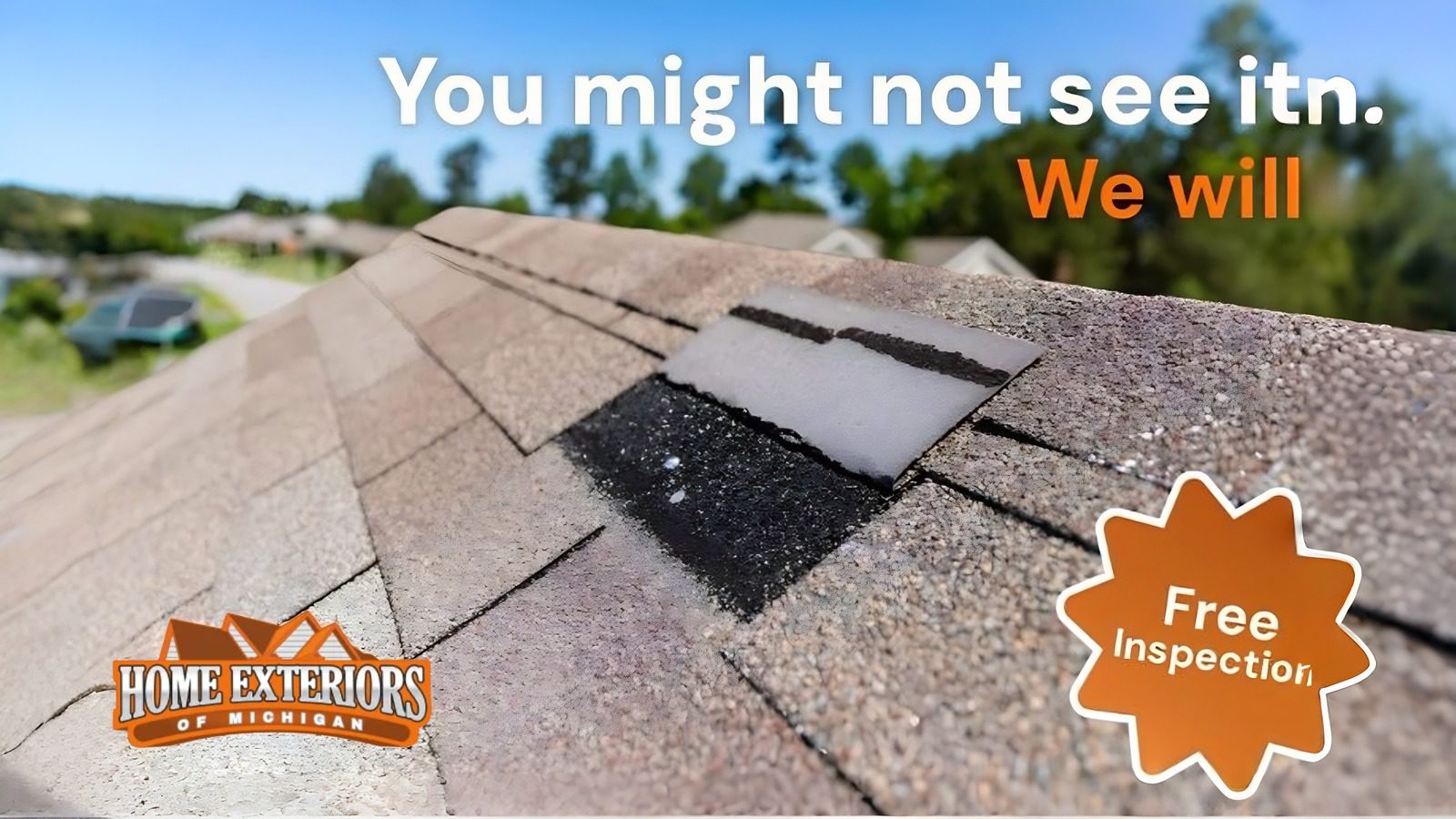

What Winter Did to Your Roof: A Michigan Spring Inspection Guide
By Home Exteriors of Michigan
Michigan winters are not gentle.
Between heavy snow loads, ice dams, freezing rain, and relentless wind, your roof absorbs months of punishment before spring even arrives. And just because the snow has melted doesn’t mean the damage disappeared with it.
Spring is when roofing problems reveal themselves.
Here’s what winter likely did to your roof – and how to properly inspect it before small issues turn into expensive repairs.
Ice Dams & Hidden Water Intrusion
If you saw thick ridges of ice along your gutters this winter, there’s a chance moisture worked its way beneath your shingles.
Ice dams form when:
- ● Snow melts on warmer roof sections
- ● Water refreezes near colder eaves
- ● Water backs up under shingles
What this can cause:
- ● Damaged underlayment
- ● Warped decking
- ● Interior ceiling stains
- ● Mold growth in attic insulation
Spring Check: Look for water stains on ceilings, peeling paint near rooflines, or musty attic smells.
Shingle Damage from Freeze-Thaw Cycles
Michigan’s temperature swings are brutal. Repeated freezing and thawing can:
- ● Crack shingles
- ● Loosen adhesive seals
- ● Curl edges
- ● Accelerate granule loss
Granules protect shingles from UV damage. When they wash into your gutters, your roof ages faster.
Spring Check: Inspect your gutters for excessive granules. From the ground, look for uneven or discolored patches on the roof surface.
Wind Damage You May Not Notice
Winter storms bring powerful gusts that can:
Check for:
- ● Lift shingles
- ● Break seals
- ● Loosen flashing
- ● Compromise ridge caps
The problem? Wind damage isn’t always dramatic. A slightly lifted shingle can allow slow water intrusion for months before it becomes visible inside your home.
Spring Check: Scan for:
- ● Missing shingles
- ● Lifted shingles
- ● Debris buildup in valleys
If something looks “off,” it probably is.
Flashing & Vent Vulnerabilities
Metal flashing around chimneys, skylights, and vents expands and contracts during extreme cold. That movement can:
Look for:
- ● Create micro-gaps
- ● Loosen seals
- ● Crack caulking
These are some of the most common leak points we see each spring.
Spring Check: From the ground, check for:
- ● Rusted metal
- ● Lifted edges
- ● Sealant separation
Gutter & Drainage Stress
Heavy snow and ice put weight on gutters and fasteners.
Winter may have caused:
- ● Sagging sections
- ● Loose brackets
- ● Poor drainage pitch
Improper drainage leads to foundation issues and roof edge rot.
Spring Check:
Walk your perimeter and look for sagging or separation from the fascia board.
Why a Professional Spring Inspection Matters
Many roofing problems don’t show obvious signs – until interior damage appears.
A professional inspection includes:
- ● Shingle integrity evaluation
- ● Flashing and penetration inspection
- ● Attic ventilation assessment
- ● Decking condition review
- ● Moisture detection
At Home Exteriors of Michigan, we don’t believe in scare tactics or high-pressure sales. We believe in honest assessments.
If your roof is in good shape, we’ll tell you. If it needs attention, we’ll explain why – clearly.
No gimmicks. No “today only” pricing. Just straight answers and quality workmanship.
When Should You Schedule a Spring Roof Inspection?
The best time in Michigan is:
- ● Late March through May
- ● After the last major freeze
- ● Before spring storm season intensifies
Catching minor winter damage now can prevent major summer repairs.
Looking for a trusted roofing company in Michigan? Book your free consultation
The Bottom Line
Michigan winters are tough on roofs. But the damage they leave behind doesn’t have to become a major expense – if you address it early.
Your roof takes a beating from the weather. You shouldn’t take one from your contractor.
If you’d like an honest, no-pressure spring roof inspection, we’re here to help.
A handshake you can trust. A roof that lasts.